
Grid operators have already registered 18,220 new batteries this year
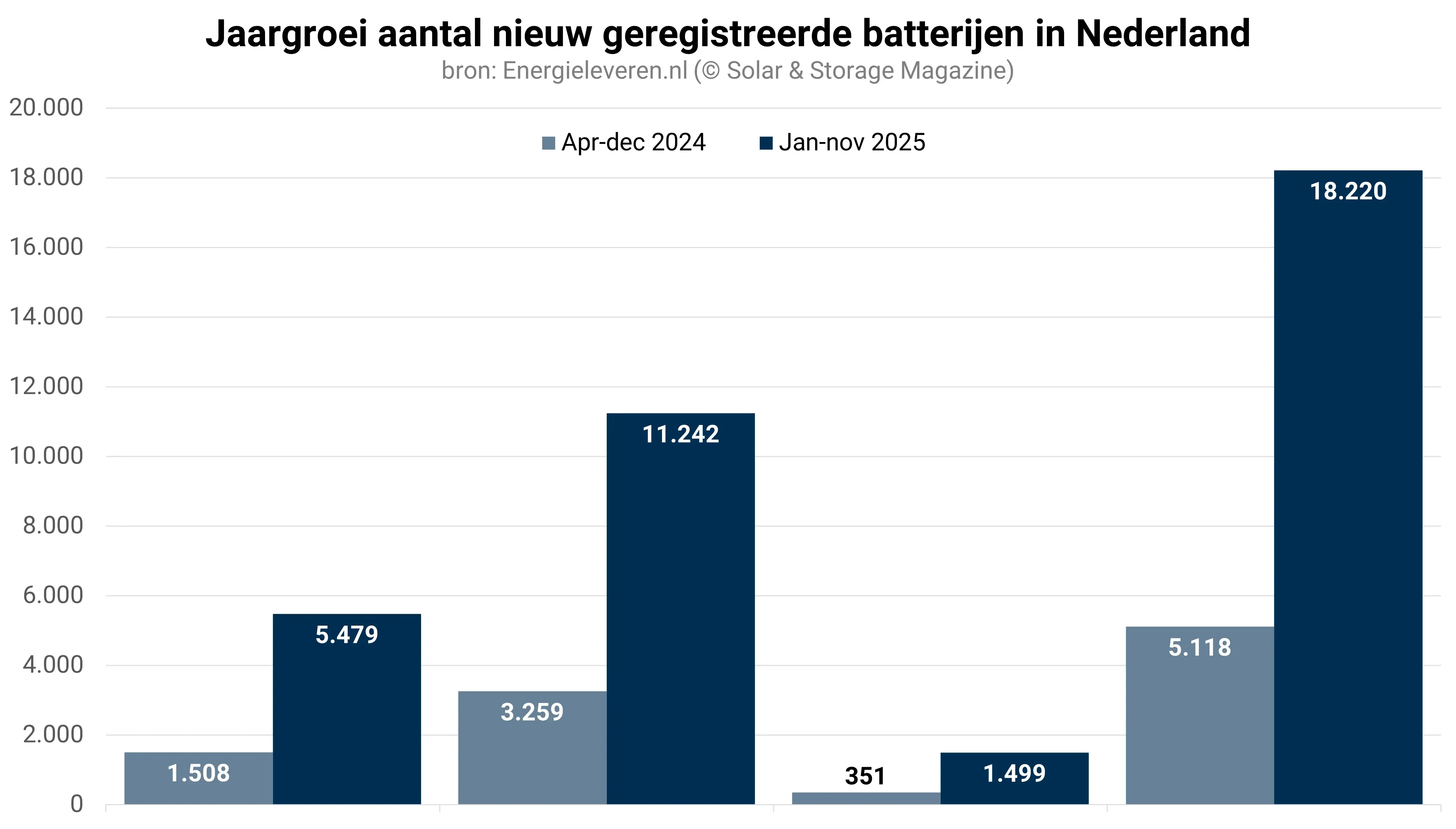
The regional grid operators have registered 18,220 new batteries up to and including the end of November this calendar year.
It is important to realise that not all consumers and companies register their battery.
In July 2022, the umbrella organization Netbeheer Nederland announced that consumers and businesses storing electricity in a home battery or other energy storage system with a capacity of up to 1 megawatt were required to register this with their grid operator.
Clear growth
Until May of last year, almost no batteries were registered with grid operators. However, since May 7, 2024 , the website energieleveren.nl has been updated, and grid operators are seeing a clear increase in the number of registrations of home and business batteries.
Energy Data Services Netherlands (EDSN) – a collaborative platform for Dutch grid operators – noted last June that perhaps only half of all batteries are actually registered with them. Netbeheer Nederland further states that while registration is mandatory, many batteries remain undetected because no fines are issued. Furthermore, no registration requirement applies to plug-in batteries. These plug-in batteries, which are plugged into a wall socket, often have a capacity of up to 0.8 kilowatts.
2,100 per month
It is therefore important to note that the grid operators' registration figures underestimate the actual number of batteries installed.
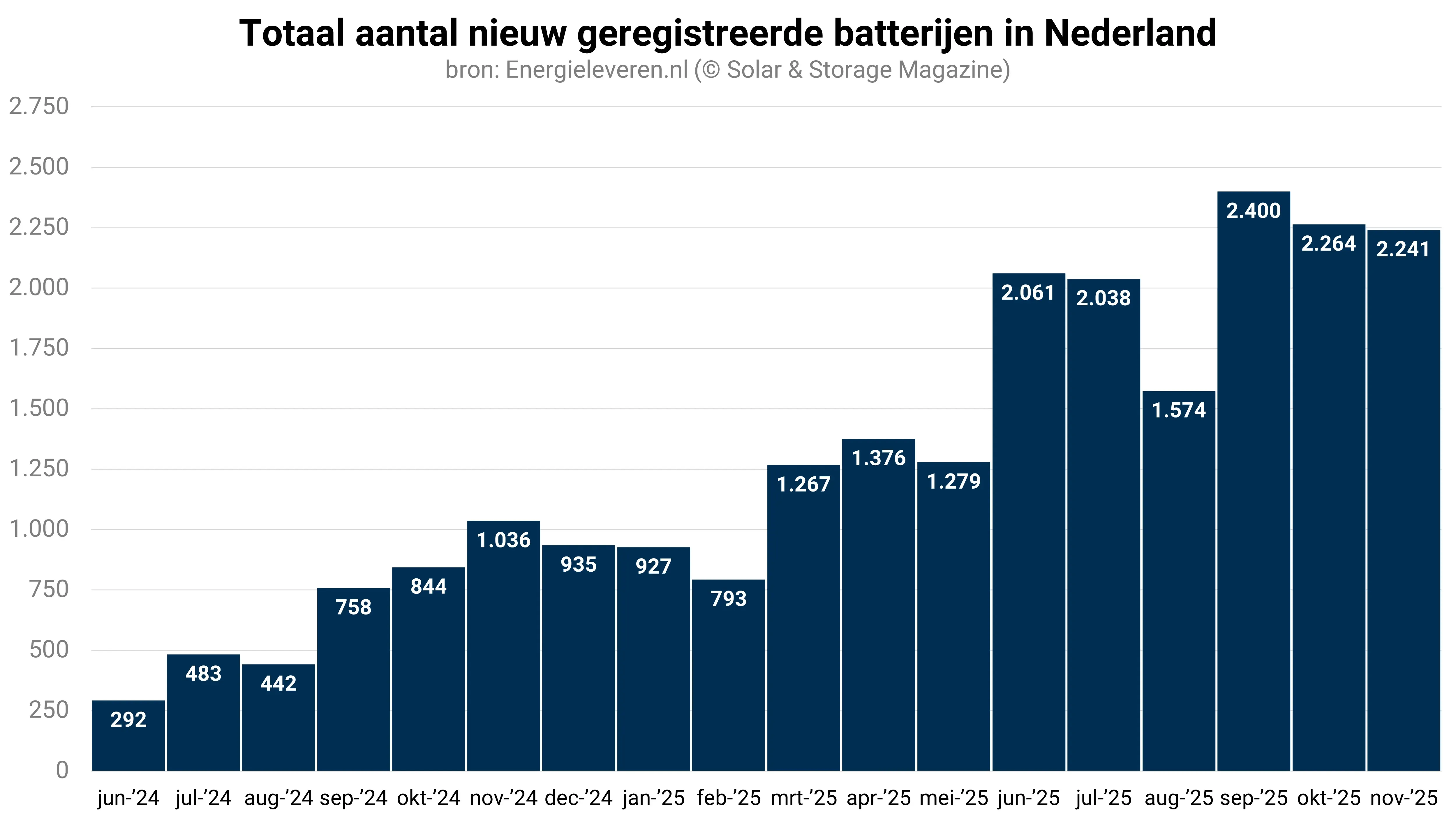
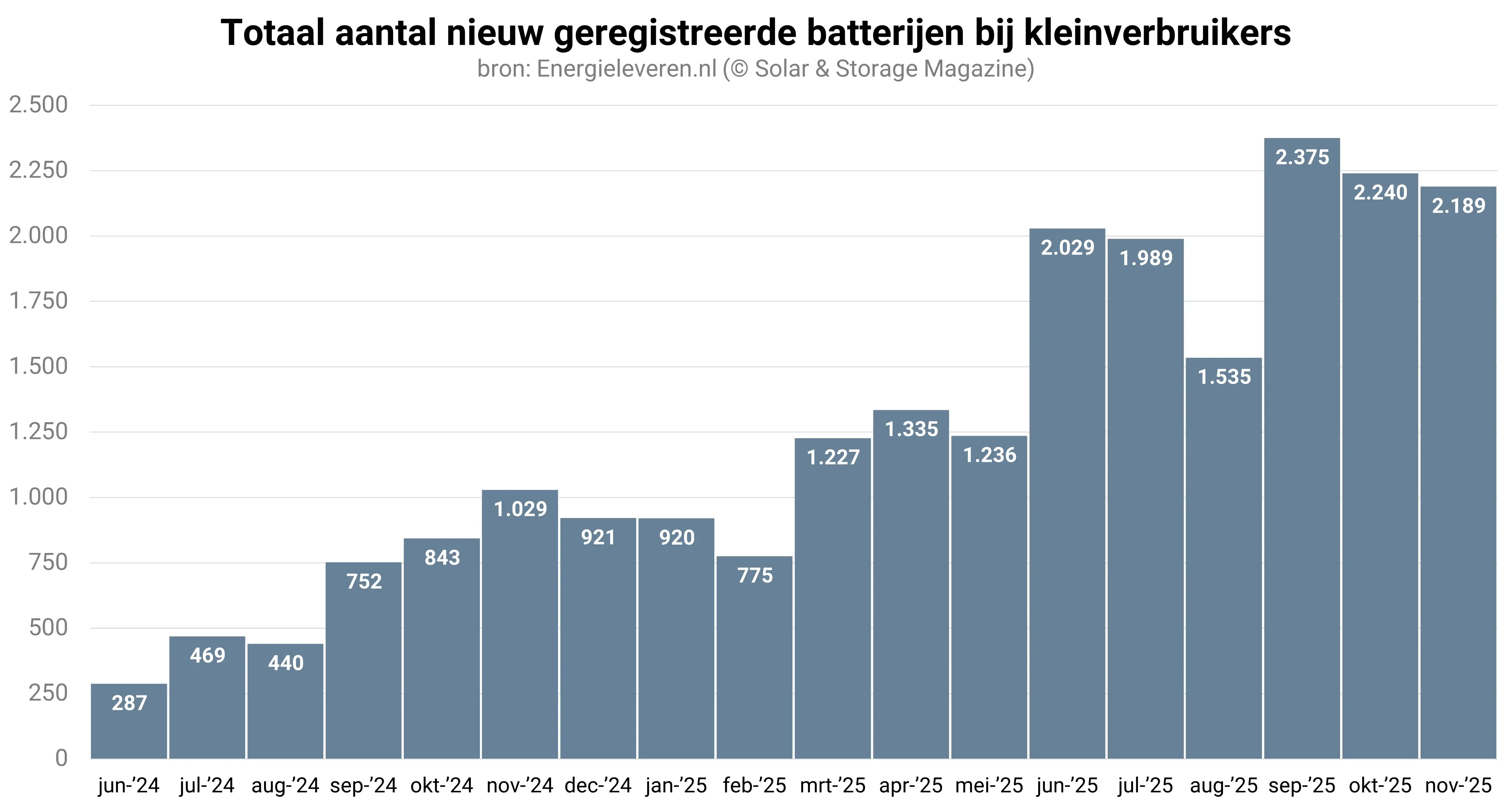
The figures show that grid operators have registered an average of around 2,100 batteries per month since June. In the first half of 2025, this figure was less than 1,300 batteries per month. In September, the number of newly registered batteries peaked at 2,400.
New power
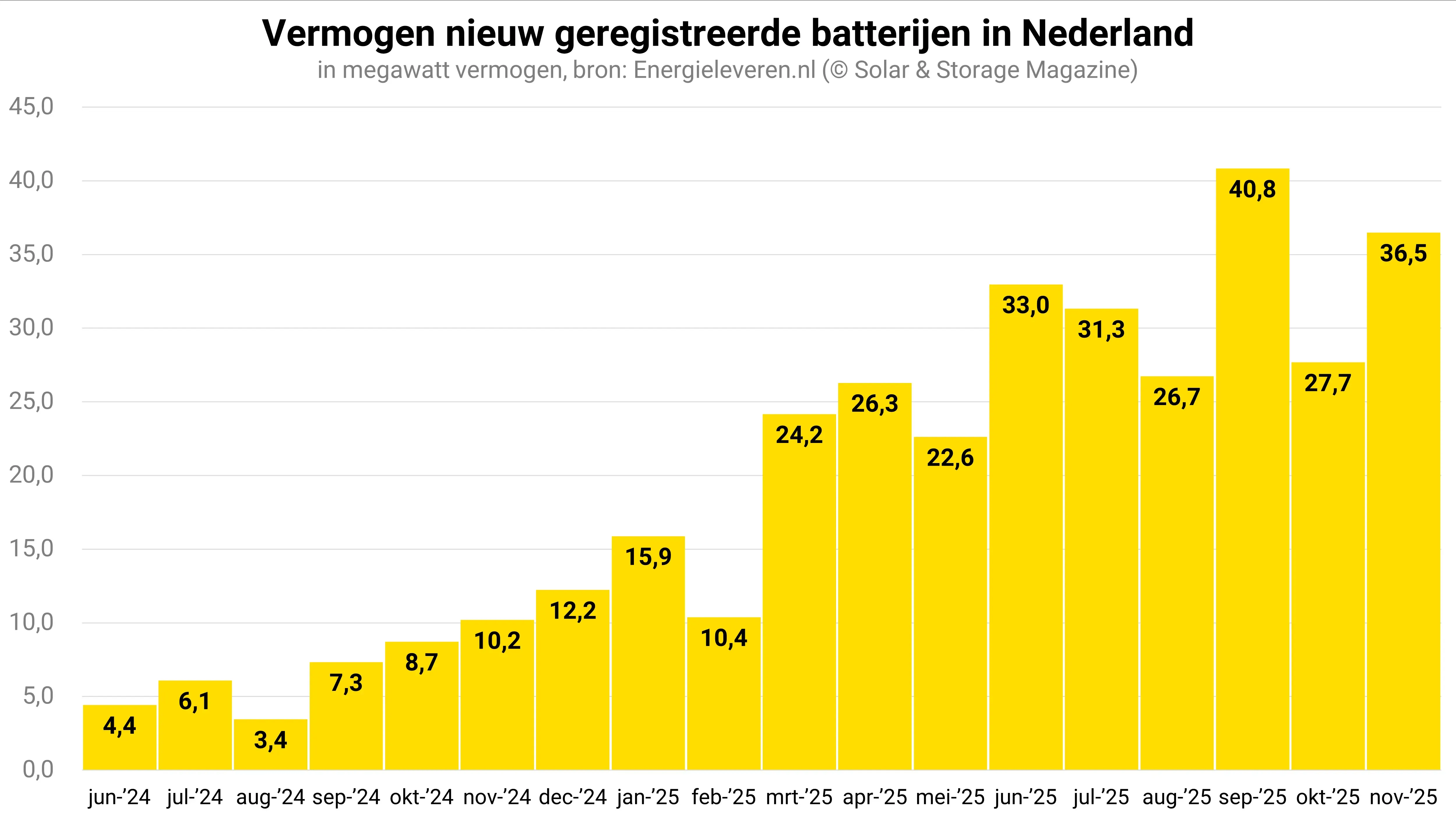
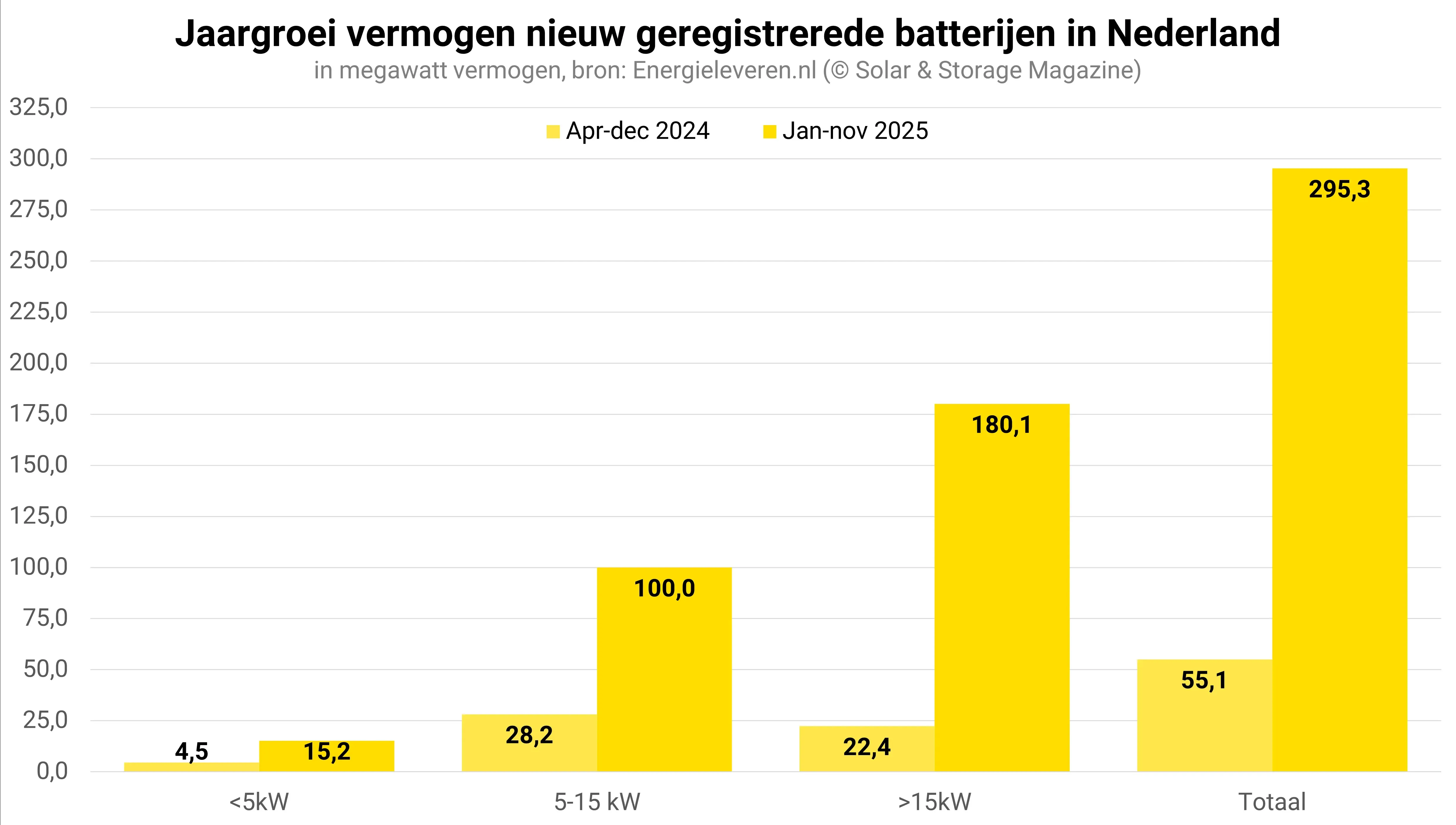
The total capacity of the newly registered batteries, measured in megawatts, has averaged 32.6 megawatts since the summer. In the first half of 2025, this was still 22.0 megawatts per month. The amount of storage capacity – expressed in kilowatt-hours – associated with the registered battery capacity is unknown.
Up to 5 kilowatts
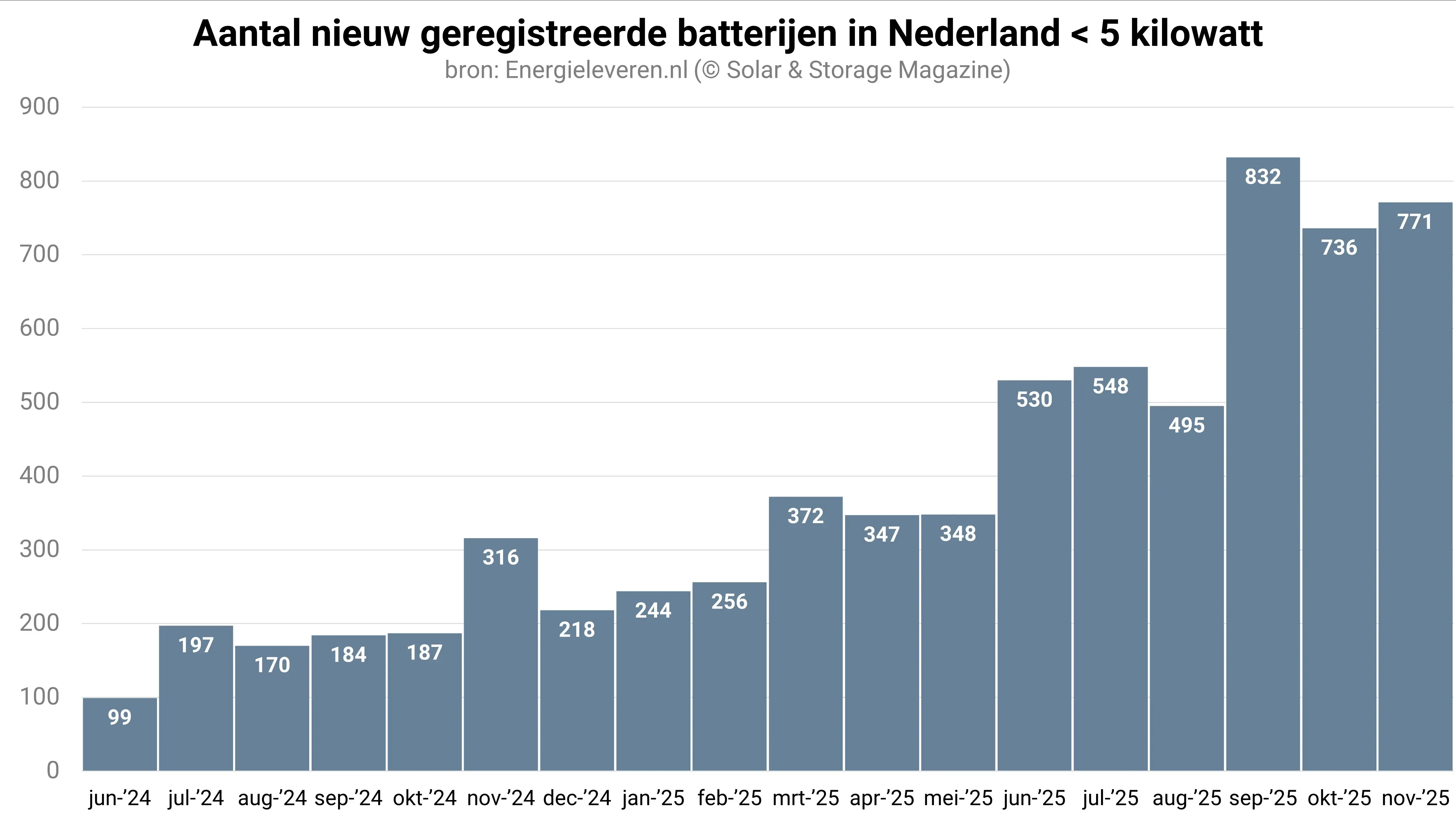
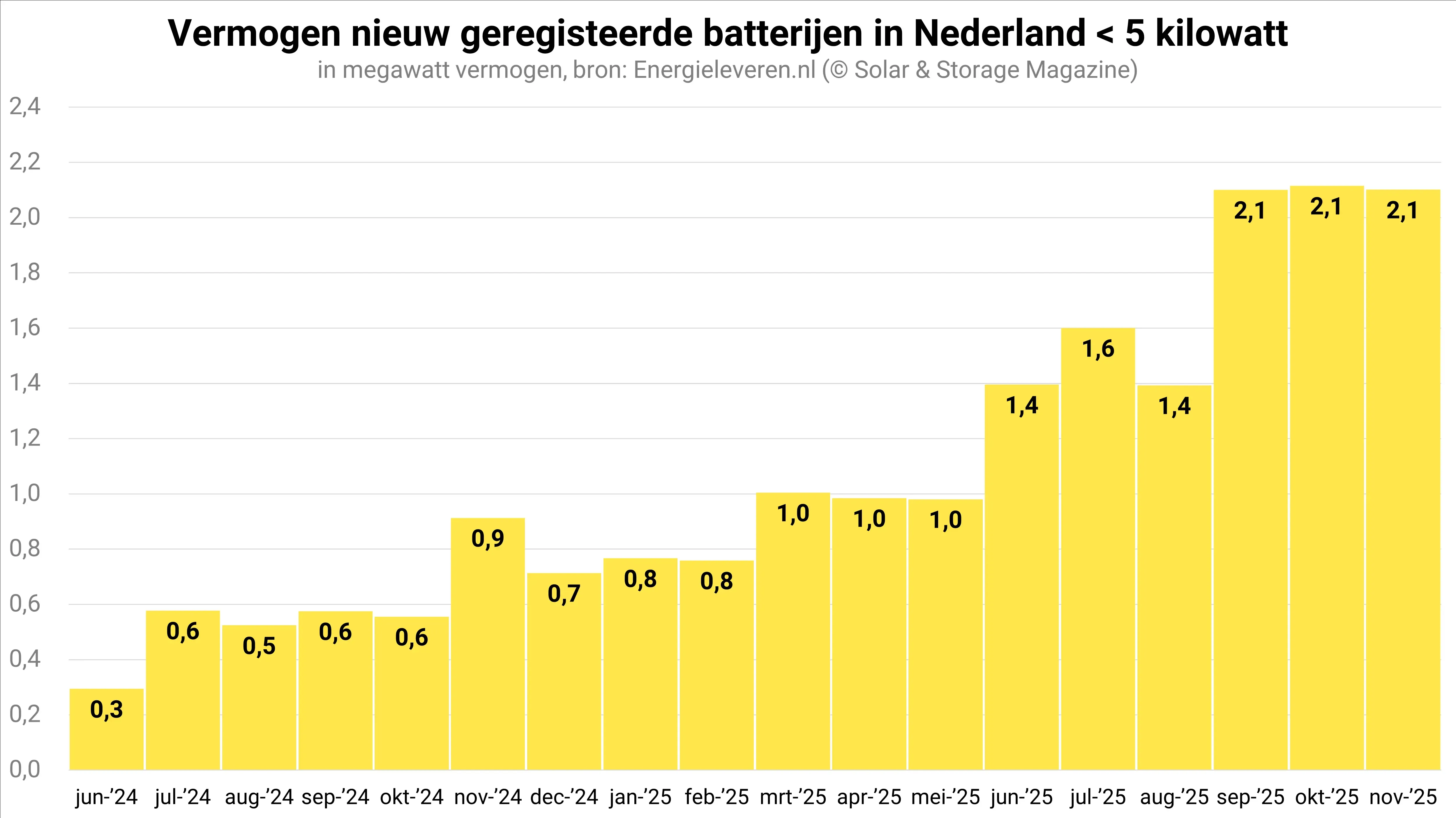
It is striking that the number of registered batteries with a capacity of up to 5 kilowatts has increased significantly since September. While the average monthly registration for the past three months was 780 new batteries, the average monthly registration level for the previous three months was 524 batteries, or almost 50 percent lower. The associated capacity grew by 40 percent, from an average of 1.5 to 2.1 megawatts.
It is important to realize that the consumer market for home batteries does not only consist of systems under 5 kilowatts, but also many installations in the 5 to 15 kilowatt capacity category are installed and registered by private individuals.
5 to 15 kilowatts
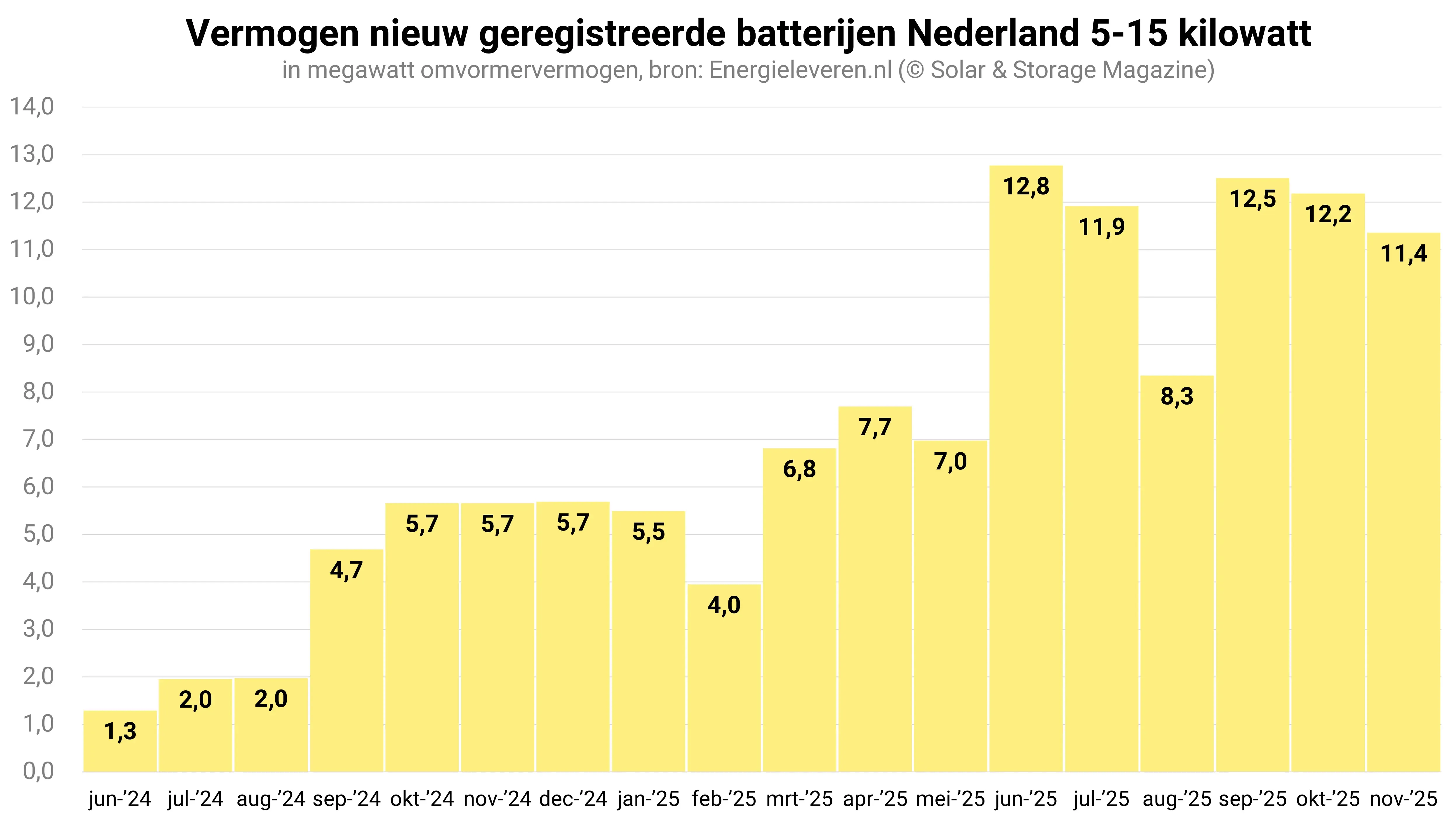
Over the past six months, nearly 1,300 new batteries were registered monthly in that category of batteries with a capacity of 5 to 15 kilowatts; that average would have been even higher if there hadn't been a clear dip in the holiday month of August, with only 935 new registrations.
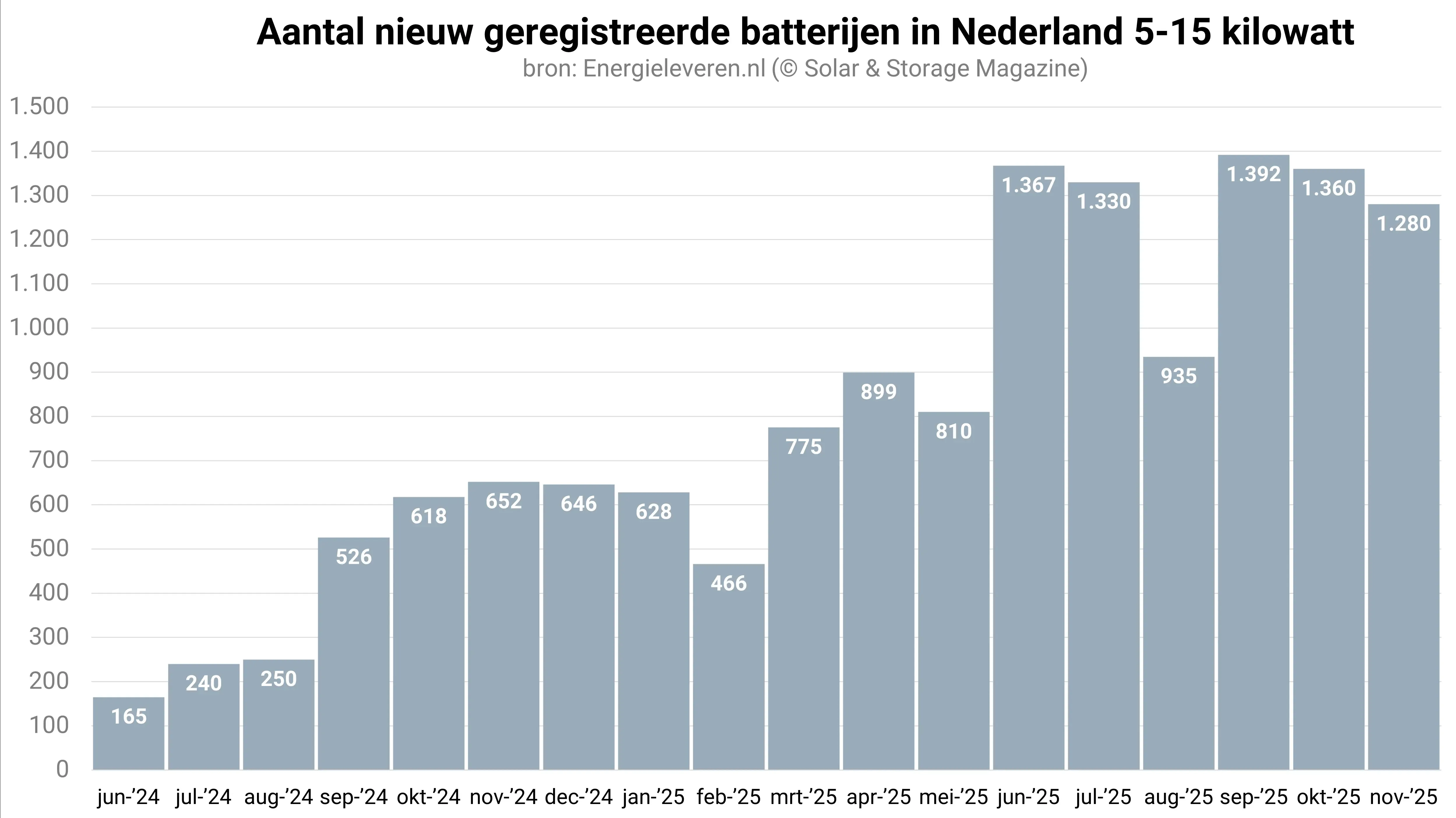
The capacity of these batteries averaged 11.5 megawatts over the past six months. Without the dip in August, it would have been as high as 12.1 megawatts.
Greater than 15 kilowatts
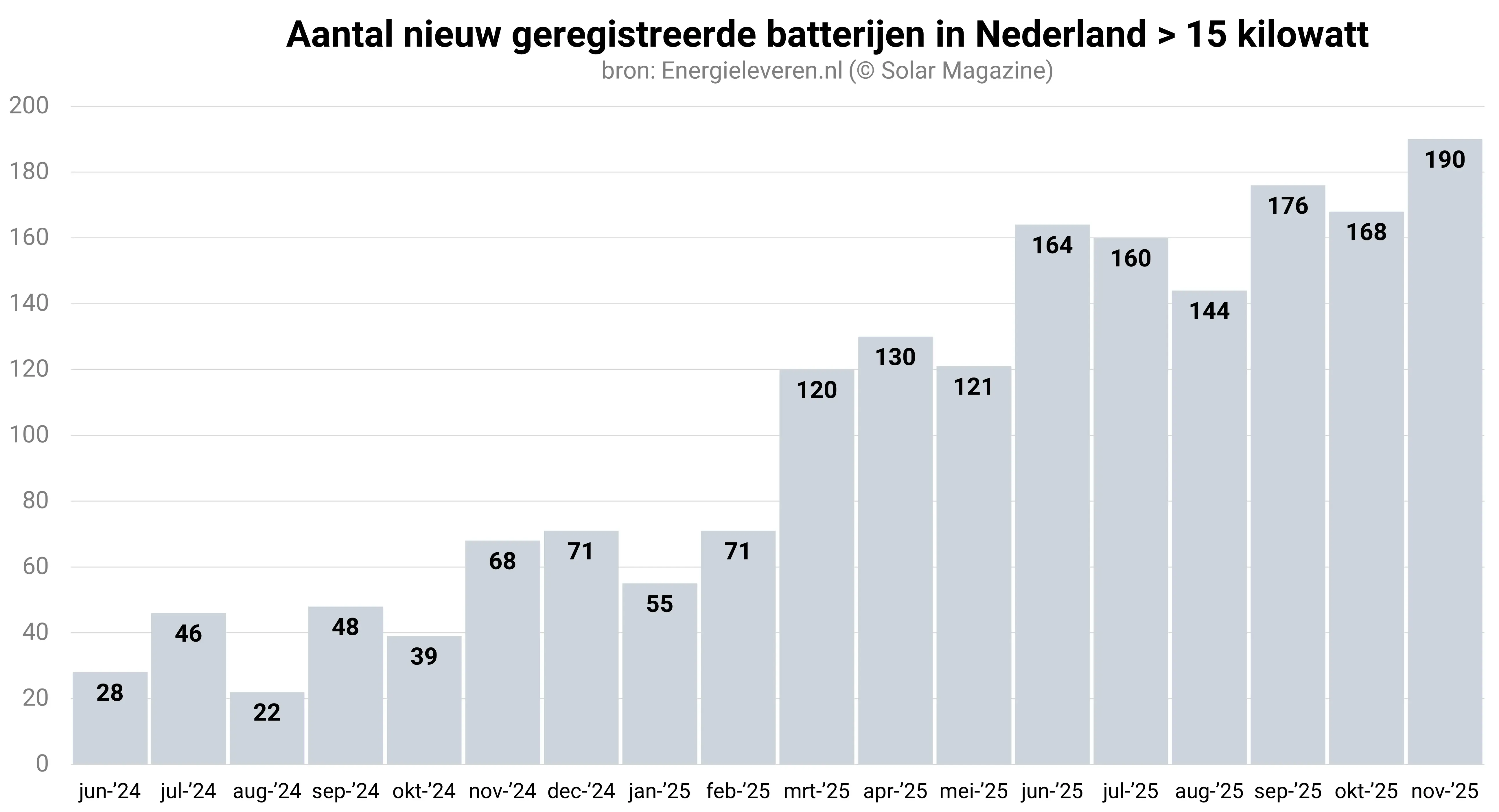
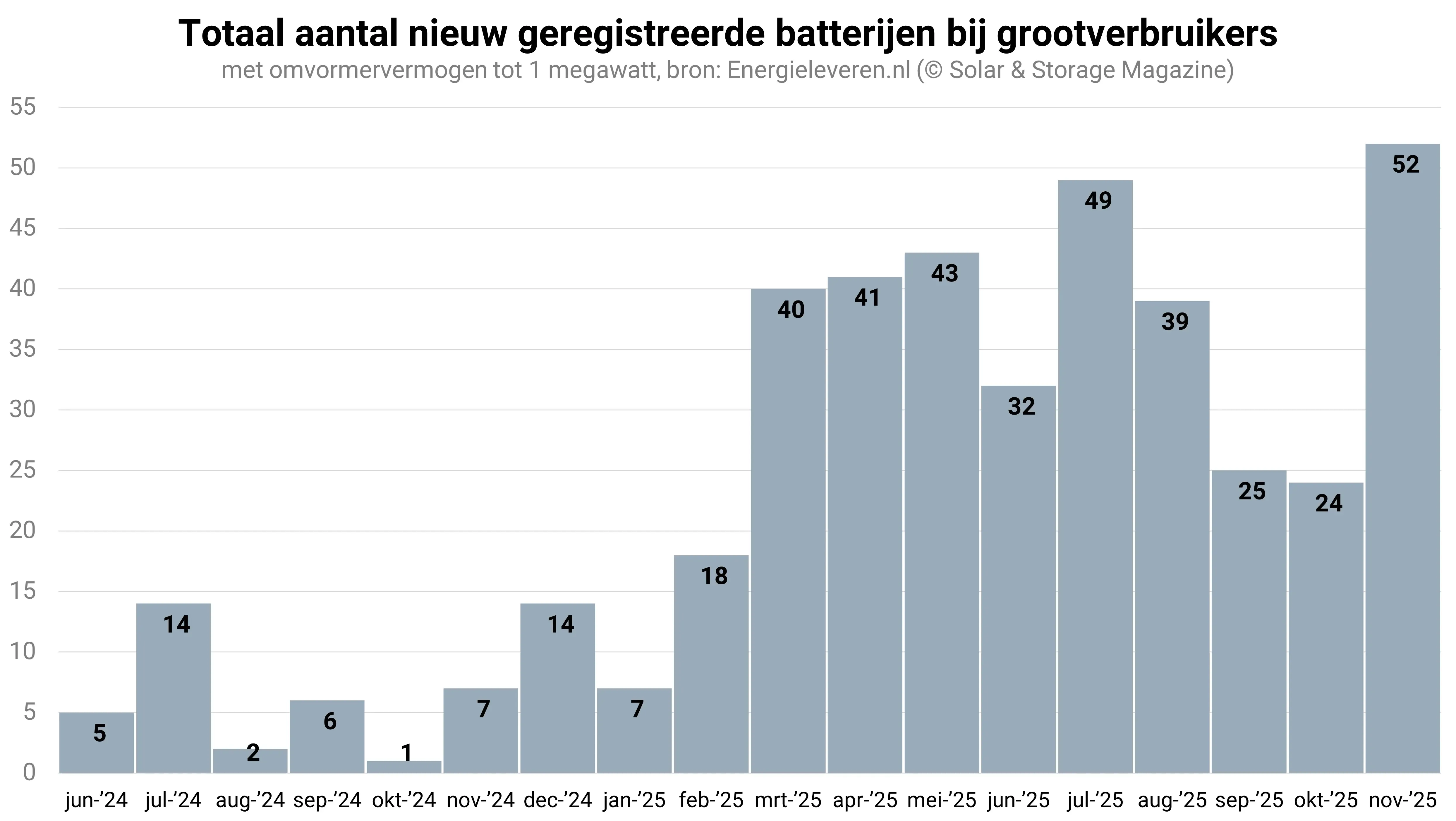
The larger battery category—those with a capacity above 15 kilowatts but below 1 megawatt—is experiencing almost continuous growth. A record 190 batteries were registered in this category in November. For comparison, that's almost three times as many as in November of last year. These batteries are likely almost all in the commercial segment, where farmers and businesses struggling with grid congestion are embracing them en masse.
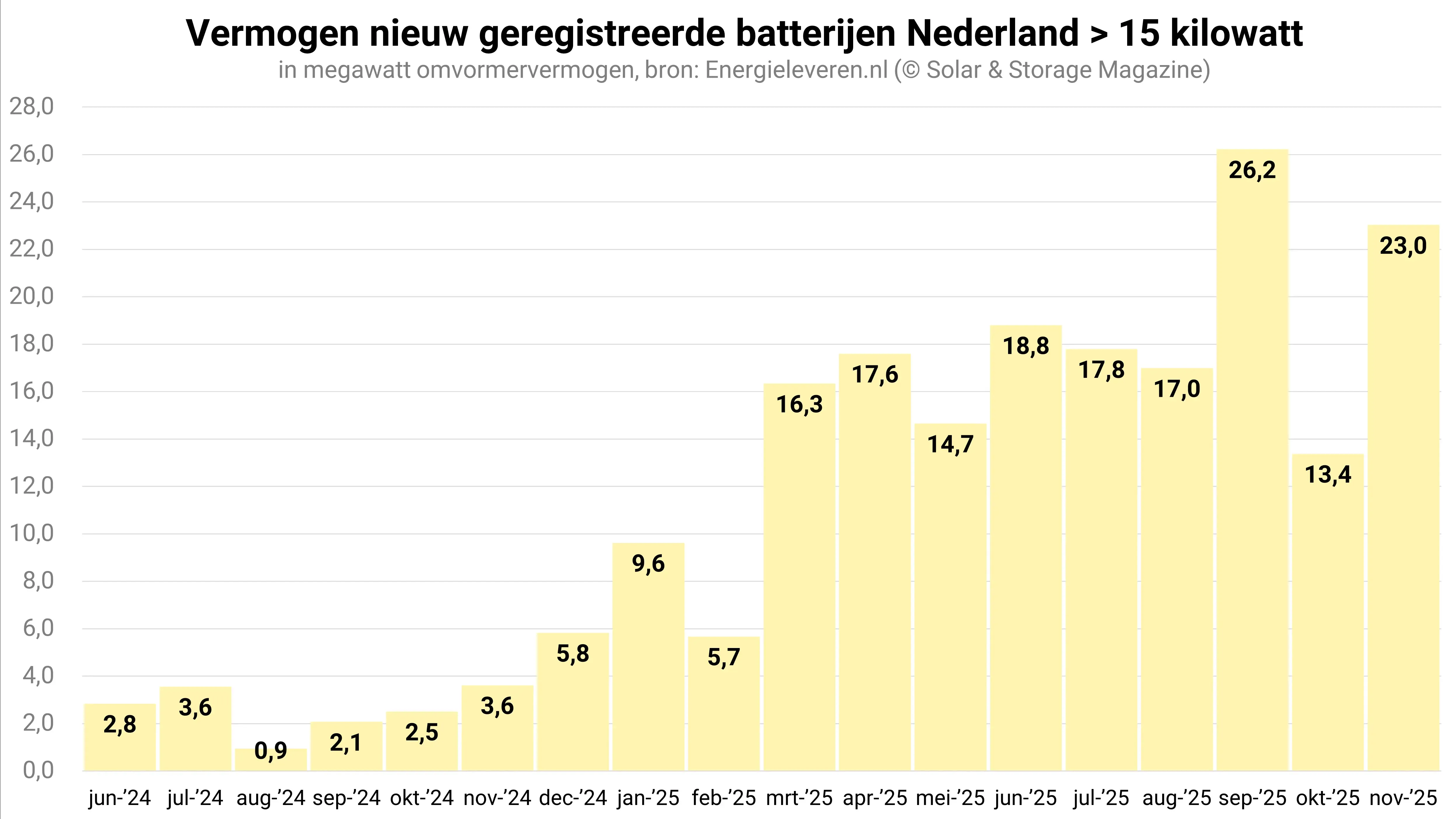
However, the newly registered capacity of these batteries did not peak in November, as September is still the calendar month in which the highest capacity was registered for this battery category.
Most power
Looking at the total amount of newly registered battery capacity in 2025, most of the capacity was registered in the largest battery category – those with a capacity exceeding 15 kilowatts. This category generated a total of 180.1 megawatts of newly registered capacity.
When looking at the number of new registrations rather than total capacity, smaller batteries ranging from 5 to 15 kilowatts constitute by far the largest group. Up to the end of November this year, 11,242 of these batteries had been registered.
Small and large consumers
Battery development among small consumers – households and small businesses – grew by over 60 percent in the second half of 2025. Only the registration figures for August represent a negative exception.
For large consumers, the months of September and October were a negative exception, with a record number of 52 batteries registered in November.
Growth every quarter
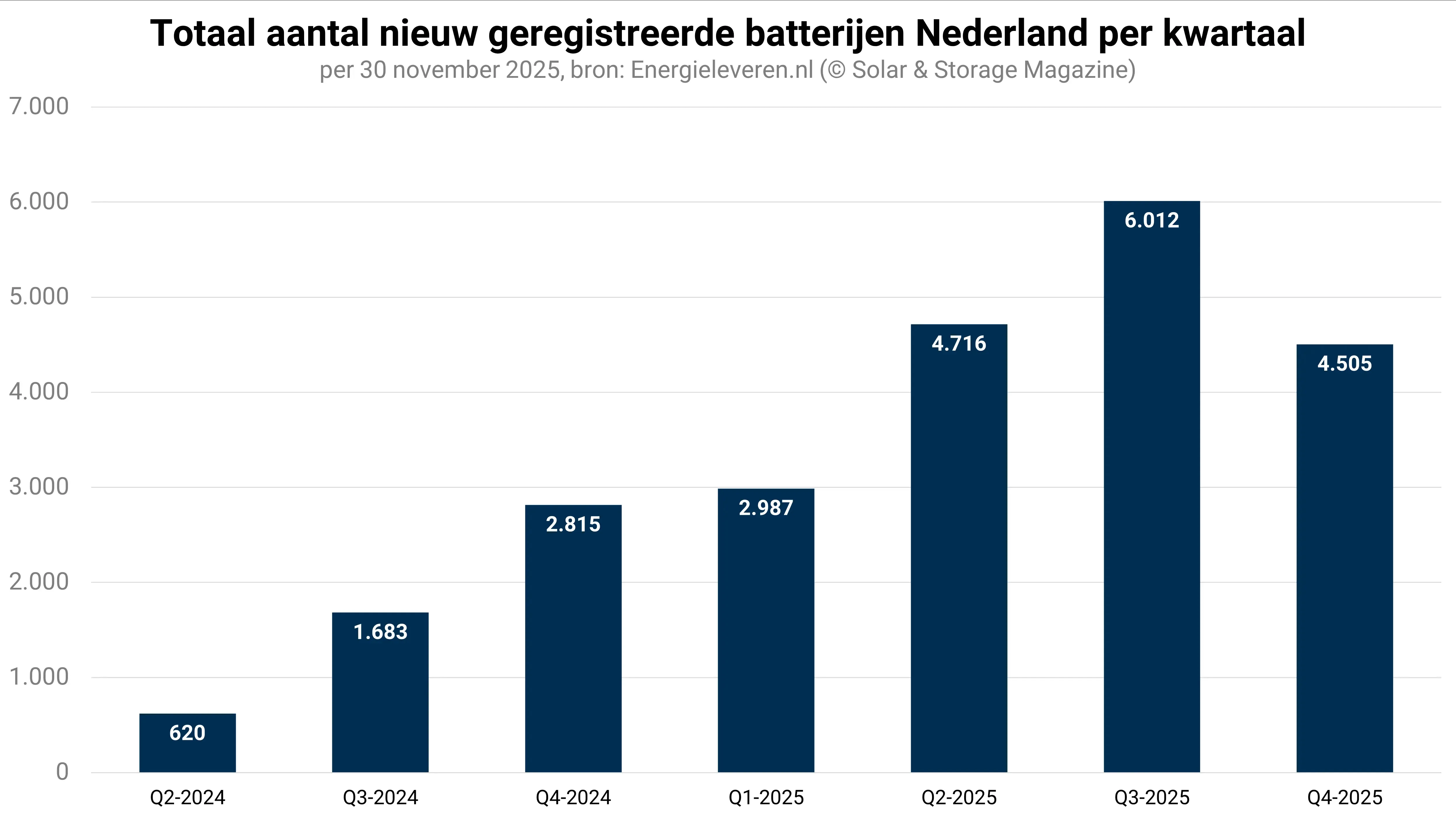
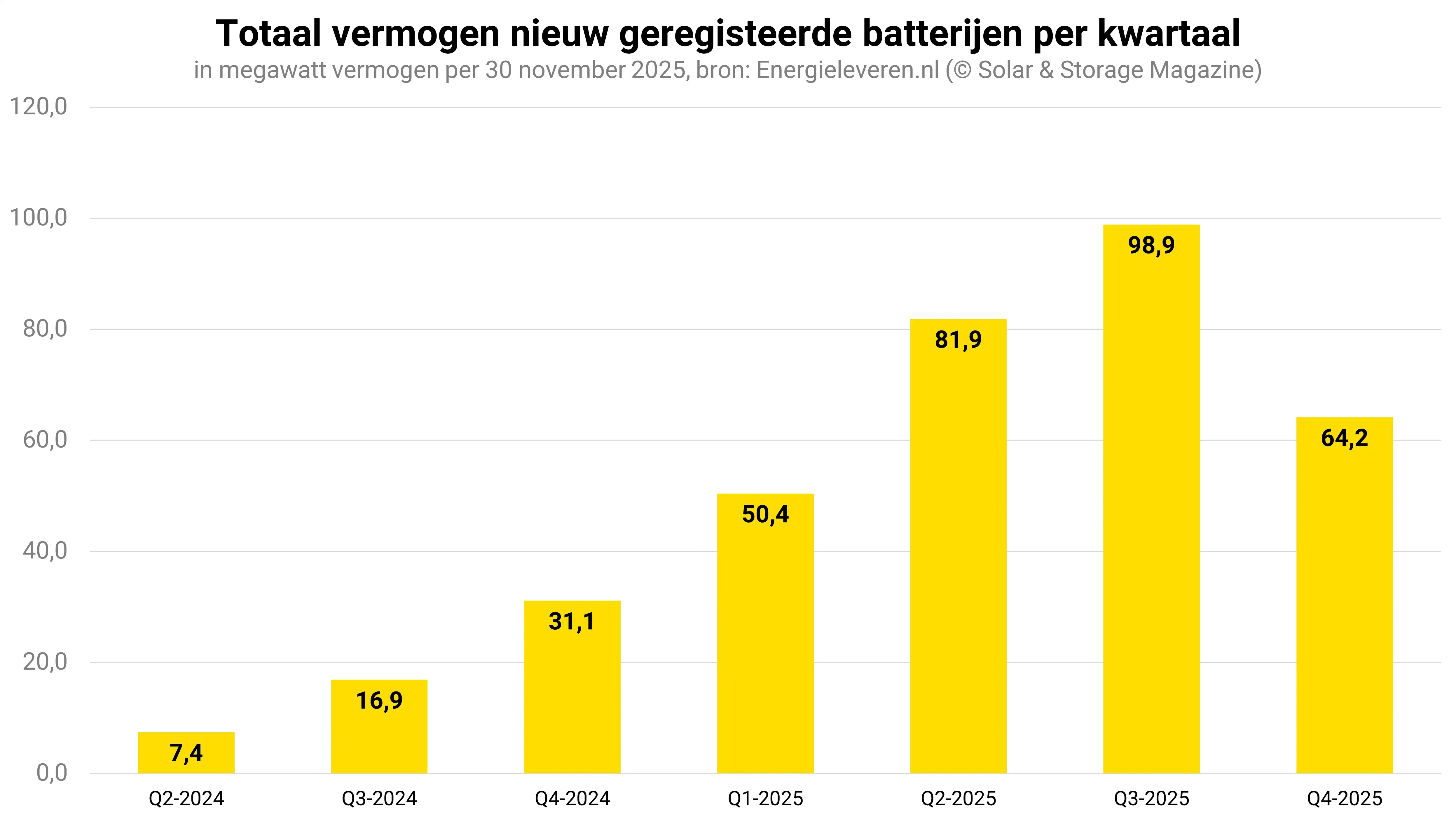
Since grid operators began registering batteries in April 2024, the number of registered batteries has been increasing quarter after quarter, as has the associated capacity.
Cumulative number of installations
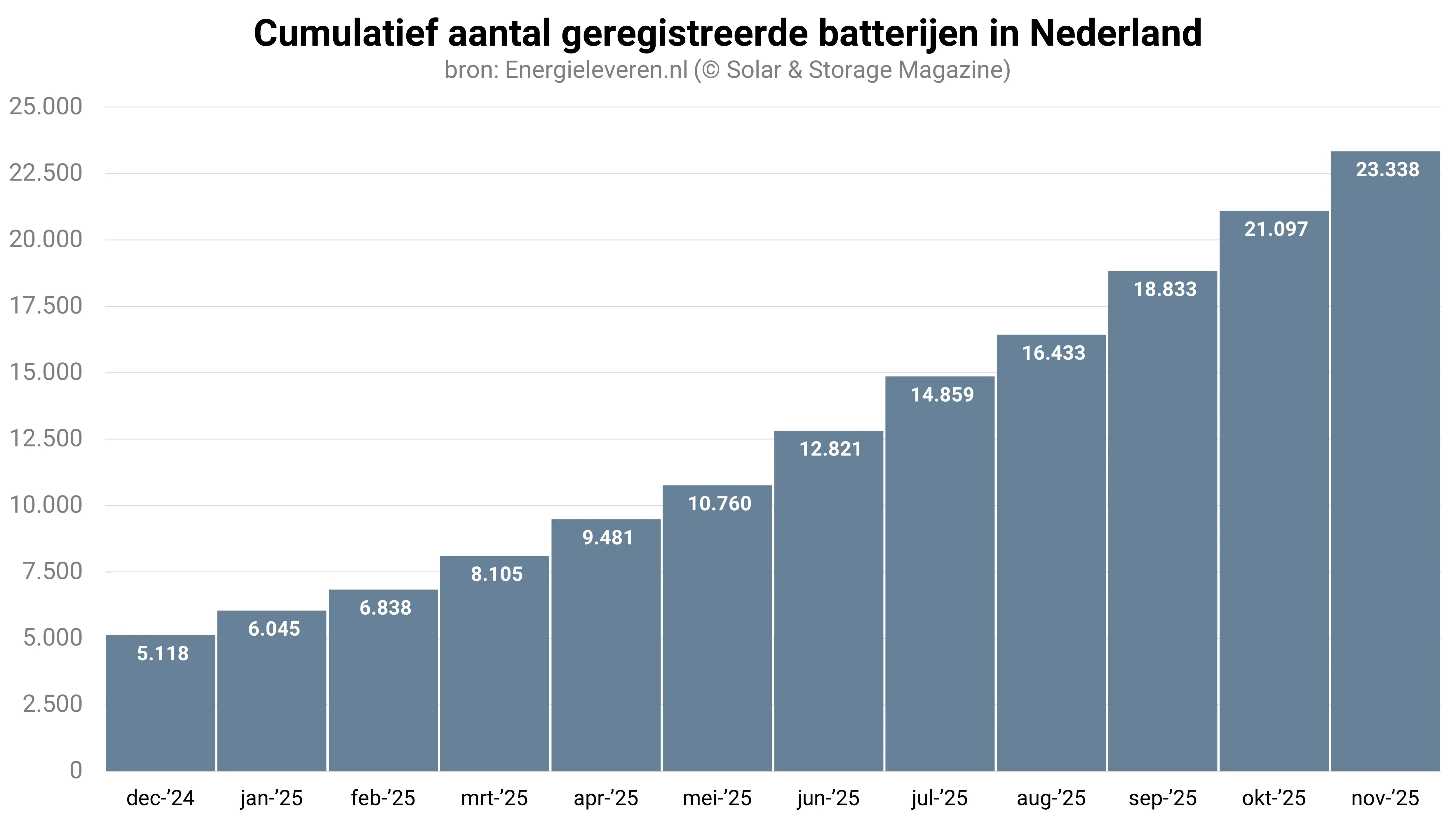
The graph below shows the cumulative number of batteries registered in CERES per calendar month. Over 23,000 batteries have now been registered with grid operators.
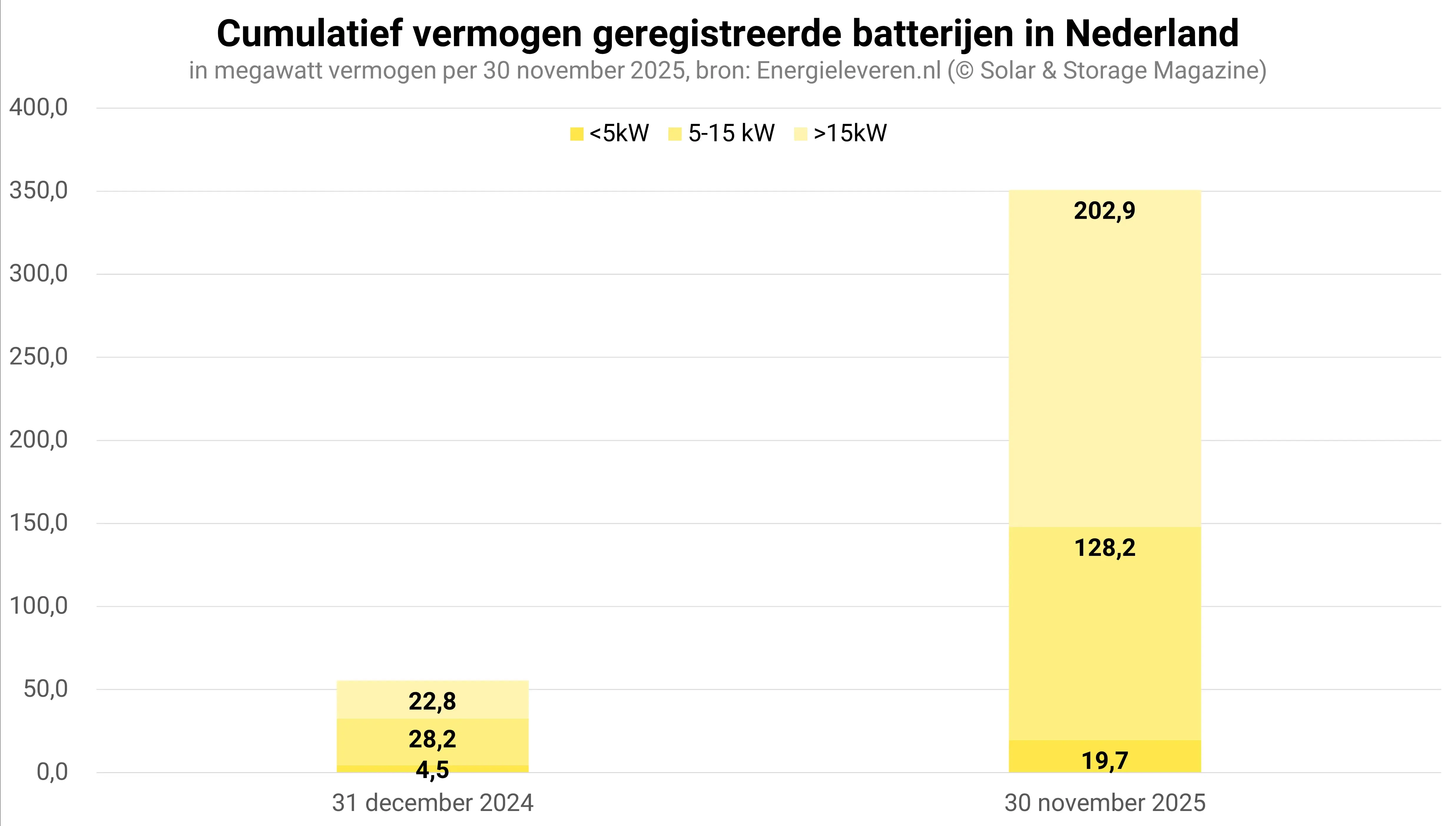
Cumulative capacity of installations
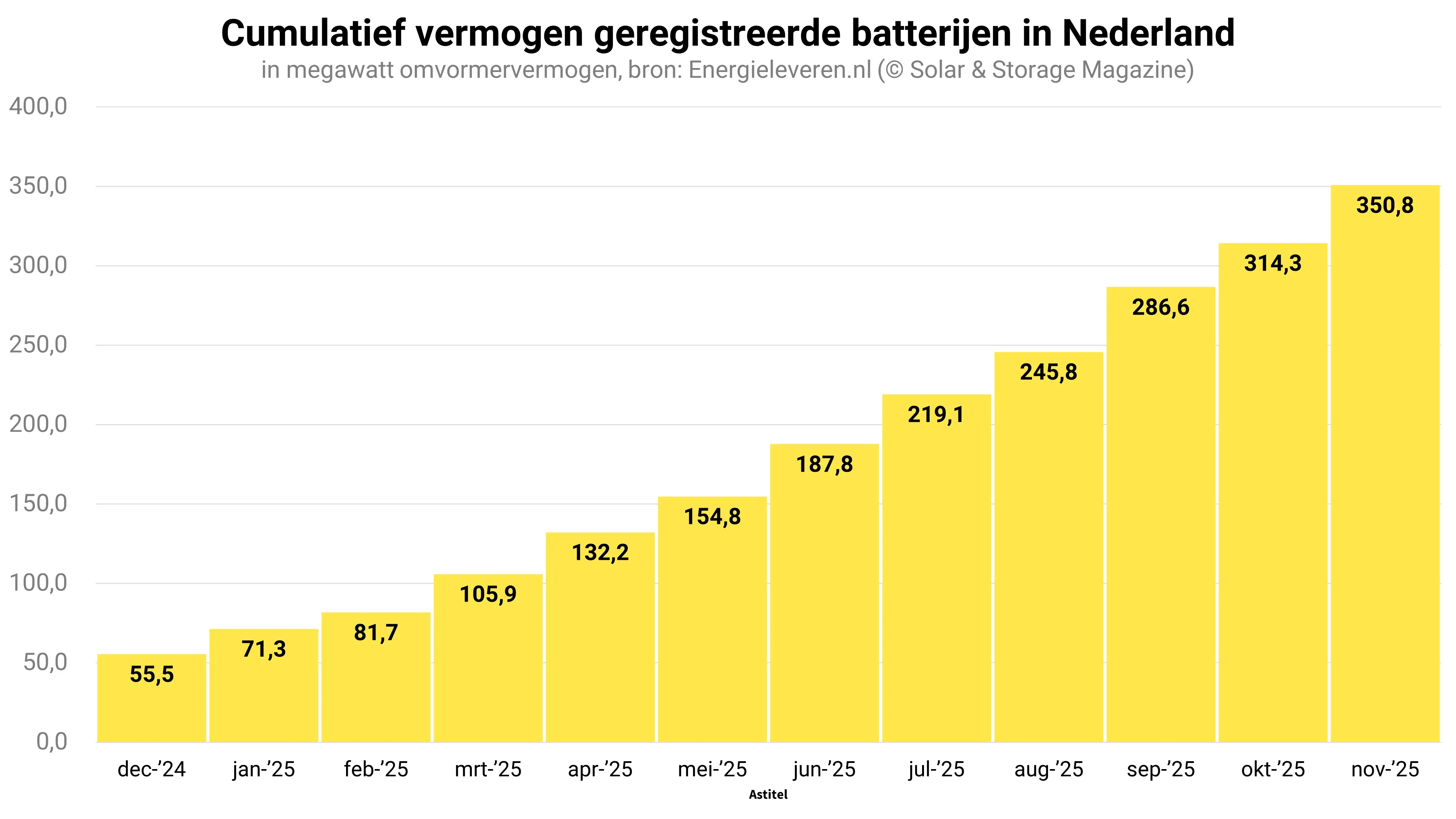
The cumulative battery capacity registered by the regional grid operators is approximately 350 megawatts.
Want to read more statistics about the energy storage market? Then read the special Solar & Storage Magazine article "The Hard Figures."
|
Disclaimer figures The CERES register of the regional grid operators contains all batteries with a connection capacity from 0.8 kilowatts to 1 megawatt – or type A according to the Requirement for Generators (RfG) – and therefore does not yet include data from batteries directly connected to TenneT's high-voltage grid. In the CERES database, grid operators attribute registered batteries to the month of registration. Because batteries are not attributed to the month of installation, the grid operators' figures are not adjusted retroactively. This means, for example, that batteries installed in September and registered in October via the website energieleveren.nl are also reflected in the statistics for October. Furthermore, it is unknown what percentage of consumers and businesses actually register their batteries with the grid operators. |
Source: https://solarmagazine.nl/laatste-nieuws
Author: Edwin van Gastel