


Dyness Stack 314 BDU & Base – control unit
Couldn't load pickup availability
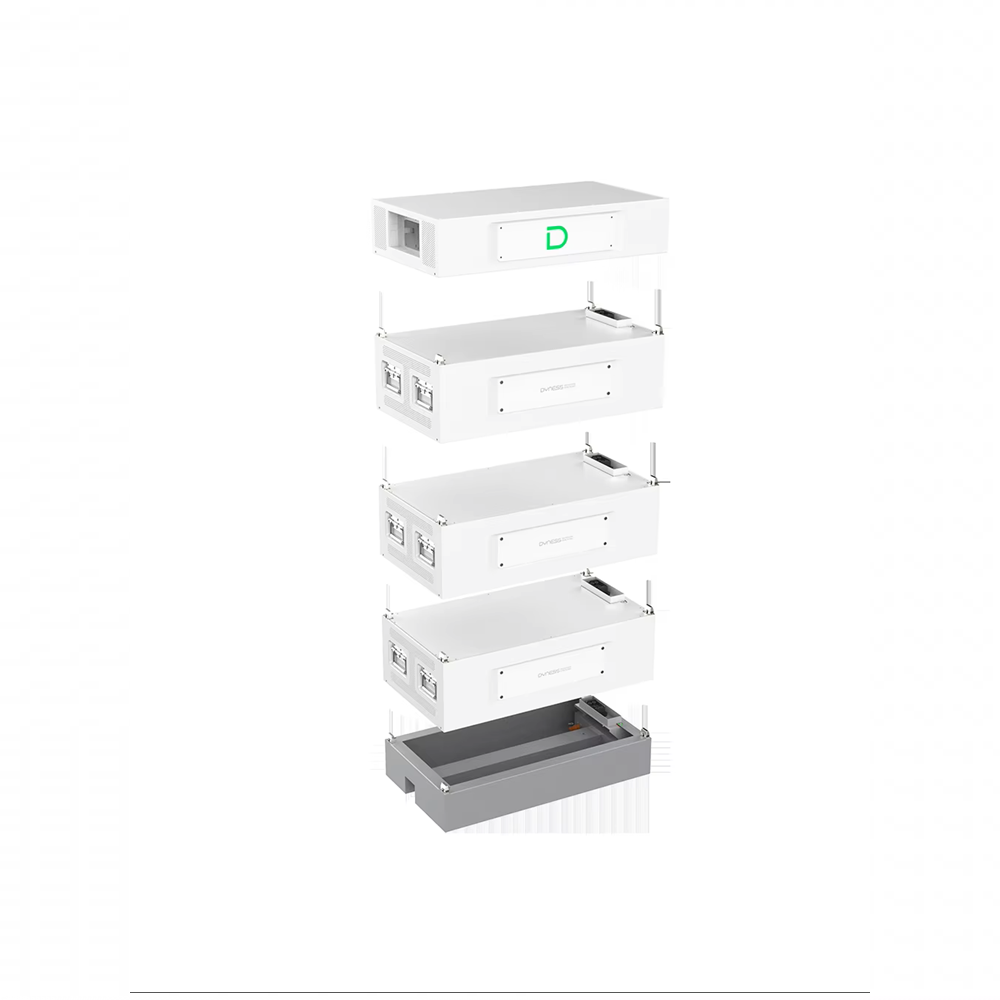
The Dyness Stack 314 BDU & Base is the central control unit of the modular STACK314 high-voltage battery system, designed for small commercial and industrial energy storage applications. The BDU (Battery Disconnect Unit) manages the connection between the battery modules and the inverter, providing protection, communication and system balance. The Base forms the stable foundation on which the battery modules are stacked cable-free via plug-and-play connection. The system supports 3 to 15 battery modules in series per cluster, resulting in an operating voltage of 134.4 to 864 V and a system capacity of 48.23 kWh to 241.14 kWh. Up to 12 clusters can be connected in parallel for a maximum capacity of 2.89 MWh. Communication with the inverter is via CAN or RS485. The system is equipped with an integrated aerosol fire extinguisher that detects and extinguishes fires within 5 seconds.
- Scalable system: supports 3–15 Stack 314 battery modules in series per cluster, up to 12 clusters in parallel — maximum 2.89 MWh.
- Cable-free installation: plug-and-play stacking connection between modules — no separate DC cables between modules required.
- High charge and discharge rate: max. continuous charge/discharge current 200 A (0.64C); recommended 140 A (0.45C).
- Module mixing: modules from different production dates may be mixed within three years — flexible for future expansion.
- Integrated fire protection: built-in aerosol fire extinguisher detects and extinguishes fires within 5 seconds.
- Long service life: LFP cells, ≥8,000 cycles, 10-year manufacturer warranty.
- Certified: UN38.3, CE-EMC and IEC62619 certified for professional installation and operation.
Technical notes for installers
The BDU & Base is suitable for indoor use only (IP20). The BDU (model SBDU200) has dimensions of 770 × 425 × 160 mm and weighs 19.2 kg; the Base/Upper Cover weighs 18.5 kg — the combined weight of BDU & Base is therefore 37.7 kg. Cluster height is 293 + 230 × n mm (where n is the number of battery modules, maximum 8 per column). The net weight of a complete cluster is 38 + 115 × n kg. If more than 8 modules are required, two columns must be used. For installations on an upper floor, the load-bearing capacity must be assessed by a structural professional. The system supports WiFi + App (user interface) and communicates with the inverter via CAN or RS485. Consult the compatibility list for the correct communication settings per inverter type.
| Parameter | Value |
|---|---|
| Battery type | LiFePO₄ (LFP) |
| Nominal energy per module | 16.076 kWh |
| Usable energy per module | 15.272 kWh |
| Nominal capacity | 314 Ah |
| Nominal voltage | 51.2 V |
| Operating voltage | 134.4–864 V |
| System capacity (1 cluster) | 48.228–241.14 kWh |
| Max. system capacity (12 clusters parallel) | 2.89 MWh |
| Min. battery modules per cluster | 3 |
| Max. battery modules in series | 15 |
| Max. modules per column (recommended) | 8 |
| Max. clusters in parallel | 12 |
| Recommended charge/discharge current | 140 A (0.45C) |
| Max. continuous charge/discharge current | 200 A (0.64C) |
| Peak discharge current (25 °C) | 280 A, 2 min |
| Recommended charge/discharge power | 7.168 kW |
| Max. charge/discharge power | 10.24 kW |
| Depth of discharge (DOD) | 95% |
| Charging temperature | 0 °C to +55 °C (optional: −20 °C to +55 °C) |
| Discharging temperature | −20 °C to +55 °C |
| BDU SBDU200 dimensions (W × D × H) | 770 × 425 × 160 mm |
| BDU weight | 19.2 kg |
| Base / Upper Cover weight | 18.5 kg |
| BDU & Base combined weight | 37.7 kg |
| Cluster height (n modules) | 293 + 230 × n mm |
| Cluster weight (n modules) | 38 + 115 × n kg |
| Protection rating | IP20 (indoor use only) |
| Cooling | Forced air cooling |
| Communication | CAN / RS485 |
| User interface | WiFi + App |
| Installation method | Cable-free stacking (plug-and-play) |
| Cycle life | ≥8,000 cycles (0.2C, 25 °C, 95% DOD, 70% EOL) |
| Warranty | 10 years |
| Fire protection | Integrated aerosol fire extinguisher (<5 seconds) |
| Certifications | UN38.3 · CE-EMC · IEC62619 |
What is included in the Dyness Stack 314 BDU & Base package?
The package contains the BDU (SBDU200, 19.2 kg) and the Base/Upper Cover (18.5 kg) as the control unit for the STACK314 system — combined weight 37.7 kg. Battery modules (S51314, 16.076 kWh per module) are not included and are sold separately. A minimum of 3 battery modules is required for a functional system. Please consult the installation manual for the complete packing list including mounting hardware, communication cables and accessories.
Which inverters are compatible with the Dyness Stack 314?
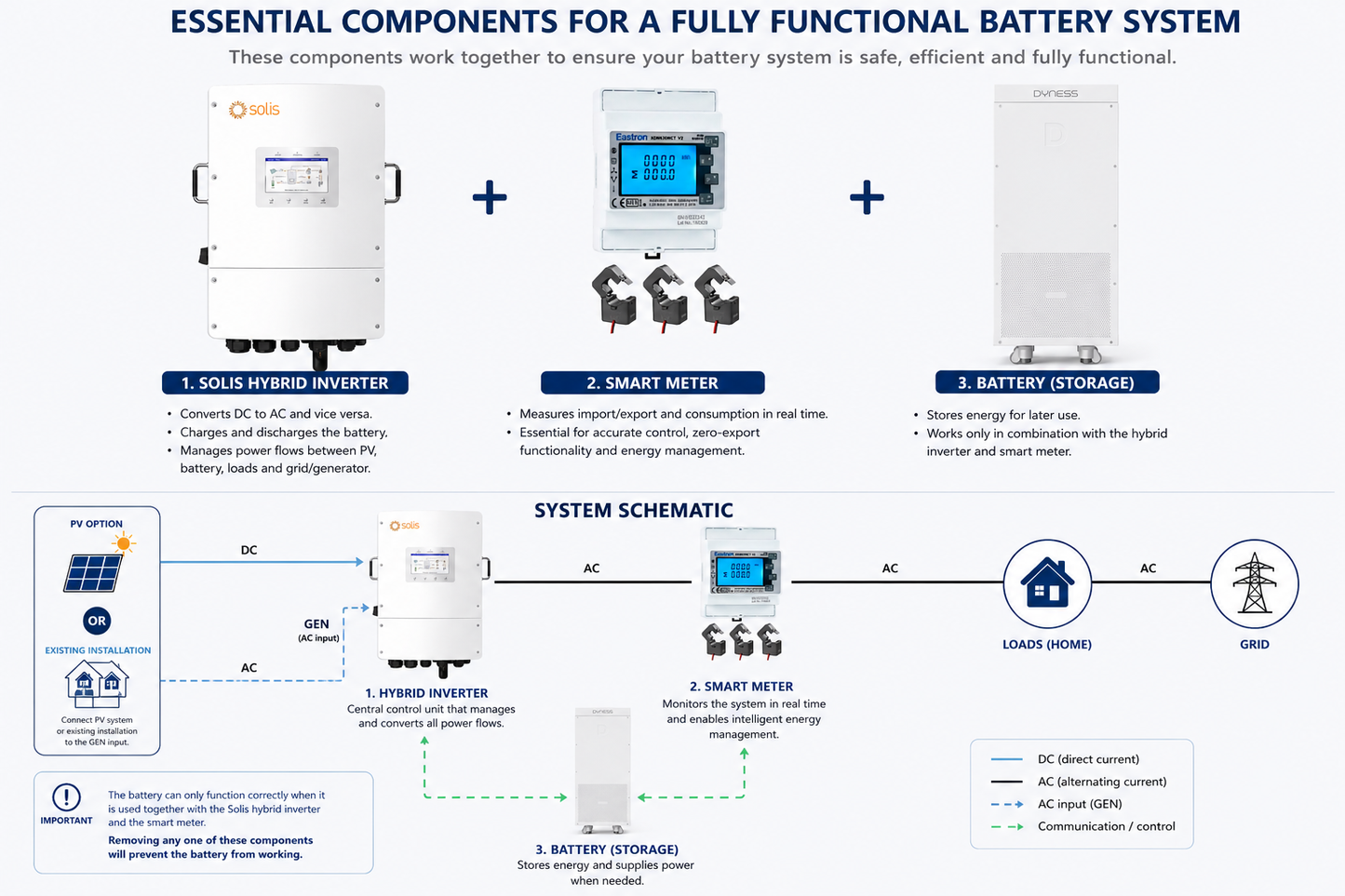
The Dyness Stack 314 BDU communicates via CAN or RS485 and is compatible with, among others: ATESS, Deye, Growatt, Megarevo, Solinteg, Solis, Sosen and Sinexcel. Please consult the installation manual and the current Dyness compatibility list for model-specific and settings details per inverter type.
How many battery modules can be connected to the Dyness Stack 314 BDU?
Per cluster, 3 to 15 battery modules in series can be connected, resulting in a system capacity of 48.23 kWh to 241.14 kWh per cluster. A maximum of 8 modules per column is recommended (cluster height: 293 + 230 × n mm; cluster weight: 38 + 115 × n kg). If more than 8 modules are required, two columns must be used. Up to 12 clusters in parallel are possible for a maximum system capacity of 2.89 MWh. Modules from different production dates may be mixed within three years.
What are the installation requirements for the Dyness Stack 314 BDU & Base?
The system is suitable for indoor use only (IP20). Installation by certified electricians only, in accordance with applicable national standards. The combined weight of BDU & Base is 37.7 kg (BDU 19.2 kg + Base/Upper Cover 18.5 kg). For installations on an upper floor, the load-bearing capacity must be assessed by a structural professional — cluster weight is 38 + 115 × n kg. The cable-free stacking connection between modules significantly simplifies installation. Ensure adequate ventilation around the system for the forced air cooling. Please consult the installation manual for all installation requirements.
What is the difference between the Dyness Stack 314 and the Stack 280?
The Stack 314 uses 314 Ah LFP cells (16.076 kWh per module) compared to 280 Ah cells in the Stack 280 (14.34 kWh per module). The Stack 314 therefore offers higher energy density per module and a larger maximum system capacity of 2.89 MWh (vs. 2.58 MWh for the Stack 280). Both systems support up to 12 clusters in parallel, cable-free stacking installation, forced air cooling and an integrated aerosol fire extinguisher. The Stack 314 is specifically designed for small commercial and industrial applications where higher capacity per module is required.
Explore more products in our home battery range at Rebor.
Activate your installer account
Verify your company within 12 hours and gain immediate access to professional net pricing, engineering support and live EU inventory.
Share


Reviews in Other Languages
- Choosing a selection results in a full page refresh.
- Opens in a new window.
Topkwaliteit materialen en snelle, correcte levering. Aanrader.
Top product met hoge opslagcapaciteit voor een scherpe prijs !
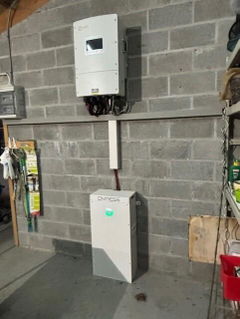
Super prestatie's voor een scherpe prijs
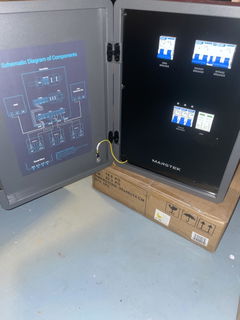
Commande bien reçu , société, très sérieuse, produits totalement conforme à mes attentes, je suis très satisfait du service client, très rapide en réponse et au niveau de l’envoi du produit, parfait pour une Smartbox Marstek monophasé . Merci à vous. Cordialement.
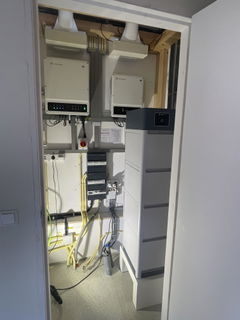
Prima advies (deze thuisbatterij past prima bij de eerder gekochte Goodwe hybrid omvormer.
Snel tot een order gekomen en ook vlot geleverd.
Een tevreden klant